Ingredient checklist
6 Checks on the Lungora Ingredients List: What Is in Each Capsule
Lungora is a capsule with six named ingredients in one blend. Here is each one, checked against the public health pages that cover it.
Quick answer: Lungora is a once-daily capsule sold as a lung cleanse formula. It holds six named ingredients: magnesium glycinate, alpha lipoic acid, butcher's broom, L-carnitine, turmeric extract and coenzyme Q10. Only the magnesium has a printed amount. None of the six has a lung or breathing page at the NIH or NCCIH.
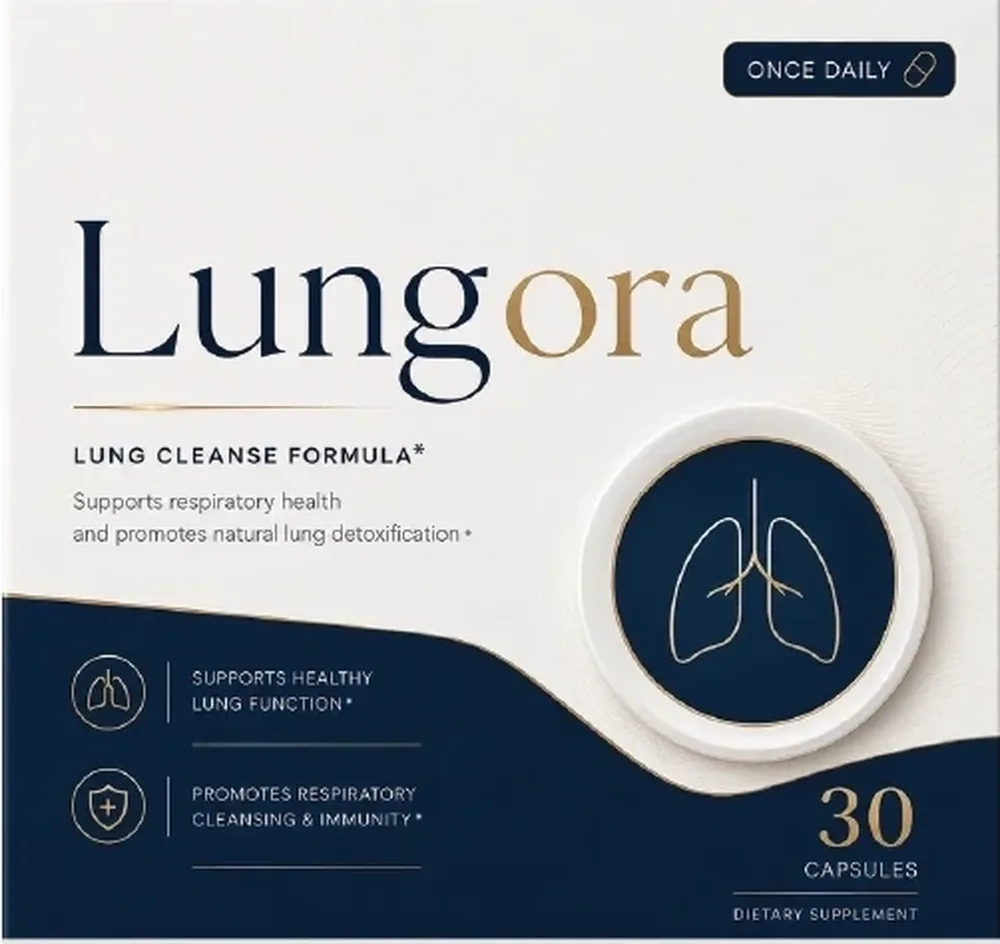
See the capsule and the terms
The checkout shows the current price and the 60-day return window, which is a useful safety net for any supplement you have not tried.
Lungoraformula earns a commission when you order through this link. It does not change your price. Questions first? The FAQ page may help.
Check 1: What is magnesium glycinate doing in Lungora?
Magnesium glycinate is magnesium bound to glycinate. Its chemical formula is C4H8MgN2O4. It is listed first in the blend, so it is the heaviest ingredient, and it is also the source of the 80 mg of magnesium on the first row.
The NIH fact sheets on magnesium cover high blood pressure, type 2 diabetes, osteoporosis and migraine. Asthma, lungs and breathing are not mentioned. So the ingredient that makes up most of this capsule has no lung page.
Key facts
- Form: capsule with a hypromellose (vegetable) shell. One capsule daily.
- The six blend ingredients are named in descending order by weight.
- Only the magnesium (80 mg) has a printed amount. The other five are minor parts of the remaining blend.
- Turmeric is the one standardised row: 95% curcuminoids. At most about 1.9 mg of extract, so about 1.8 mg of curcuminoids.
- Coenzyme Q10 is listed as ubiquinone. Whether it is better than another form is not published for this product.
- Butcher's broom has no page at the NIH Office of Dietary Supplements or at NCCIH.
Check 2: What do we know about alpha lipoic acid?
Alpha lipoic acid comes second. NCCIH covers it on its diabetes page and says it is no better than placebo at reducing blood sugar, cholesterol or triglycerides. There is no lung or breathing page.
Its printed amount is not published. By the label's own order, it can be at most 7.5 mg per capsule. That is a ceiling worked out from the other rows, not an amount the label gives.
Check 3: What is butcher's broom (Ruscus aculeatus)?
The label names the species and the plant part: Ruscus aculeatus, root extract. That is more detail than many labels print.
Beyond the name, there is little to say. Neither the NIH Office of Dietary Supplements nor NCCIH has a page on it. So nothing can be said for or against it from those sources, and this site will not fill the gap from elsewhere. Its amount is at most 3.7 mg per capsule by the label's own ordering.
Check 4: Why is L-carnitine in the blend?
The NIH carnitine fact sheet says that healthy children and adults do not need to consume carnitine from food or supplements. There is no lung or breathing page.
The seller groups L-carnitine with butcher's broom under circulation and cellular support. The ceiling for L-carnitine is about 2.5 mg per capsule, which is tiny.
Check 5: Is turmeric the star of the blend?
It is the only row with a standardisation: Turmeric (Curcuma longa) rhizome extract with 95% curcuminoids. The label names the species, the plant part and the standard. Credit where it is due.
But a standard is only as useful as the weight it is a percentage of. Turmeric sits fifth of six, so its extract is at most about 1.9 mg, which is about 1.8 mg of curcuminoids. NCCIH says that not enough is known to conclude that turmeric or curcumin helps any health purpose, and it lists no lung use. Studies it summarises use far larger amounts, which are hundreds of milligrams to grams.
NCCIH also warns that highly bioavailable curcumin products may harm the liver, and that turmeric supplements may be unsafe in pregnancy.
Check 6: What is coenzyme Q10 as ubiquinone?
Coenzyme Q10 comes last, so its share is the smallest: at most about 1.5 mg per capsule. The label says "as Ubiquinone", which is one form of CoQ10. The product's sources do not compare it with other forms, so this site makes no claim about which form is better.
NCCIH describes CoQ10 as a substance that is naturally present in the human body. It also notes that CoQ10 can interact with warfarin and insulin, and may not be compatible with some types of cancer treatment. None of that is printed on the Lungora bottle.
| Order | Ingredient | Amount on the label | Ceiling worked out |
|---|---|---|---|
| 1 | Magnesium glycinate | Magnesium 80 mg (glycinate weight not printed) | About 567 mg of compound if pure |
| 2 | Alpha lipoic acid | Not published | At most 7.5 mg |
| 3 | Butcher's broom root extract | Not published | At most 3.7 mg |
| 4 | L-carnitine | Not published | At most 2.5 mg |
| 5 | Turmeric rhizome extract 95% | Not published | At most 1.9 mg |
| 6 | Coenzyme Q10 (ubiquinone) | Not published | At most 1.5 mg |
What do the six add up to?
Put the six together and a pattern shows. One ingredient is most of the capsule, and five are small. If the glycinate is the pure compound, about 8 mg is shared by all five of the small ones. If it is a buffered kind, the share is larger, but the magnesium ingredient is still the majority across the plausible range.
The seller's own page talks about nerve health, circulation and antioxidants. It does not describe a lung mechanism. And as a plain summary: Lungora is, in practice, an 80 mg magnesium supplement with small amounts of five other things.
Frequently asked questions
What is Lungora made of?
Six named ingredients in one 575 mg blend: magnesium glycinate, alpha lipoic acid, butcher's broom root extract, L-carnitine, turmeric rhizome extract with 95% curcuminoids and coenzyme Q10 as ubiquinone.
How much of each ingredient is in a capsule?
Only magnesium is printed: 80 mg. The other five amounts are not published. By the label's order they can be at most 7.5, 3.7, 2.5, 1.9 and 1.5 mg.
Is turmeric good for your lungs?
NCCIH lists no lung use for turmeric and says not enough is known to conclude it helps any health purpose. In Lungora the turmeric extract is at most about 1.9 mg per capsule.
Is Lungora a capsule, pill, gummy or drops?
It is a capsule with a hypromellose shell. No gummy or drops form is described in the sources.
What is butcher's broom?
The label names it as Ruscus aculeatus root extract. The NIH Office of Dietary Supplements and NCCIH have no page on it, so nothing can be said about it from those sources.
Does Lungora contain any allergens?
No allergen statement is printed on the label, so this cannot be confirmed from the label. If you have an allergy, ask the seller and your doctor before use.
Our view
What is Lungora? It is a once-daily capsule that sells itself as a lung cleanse formula and is built mostly from magnesium glycinate. The label is honest about the six names. It is quiet about the amounts.
We would not buy it for the lungs on this evidence. We would understand a buyer who wants an 80 mg magnesium capsule with a 60-day return window. Ask your doctor or pharmacist first if you take warfarin, insulin, diuretics, antibiotics or any other medicine.
Last updated October 16, 2026. Written by the Lungora Editorial Desk and medically reviewed by Dr. Assad Oskuei, MD, Pulmonologist & intensivist on October 16, 2026.
Six ingredients, one daily capsule
If you want to try it, the checkout shows today's price and the guarantee. Ask your doctor first if you take any medicine.
Lungoraformula earns a commission when you order through this link. It does not change your price. Questions first? The FAQ page may help.